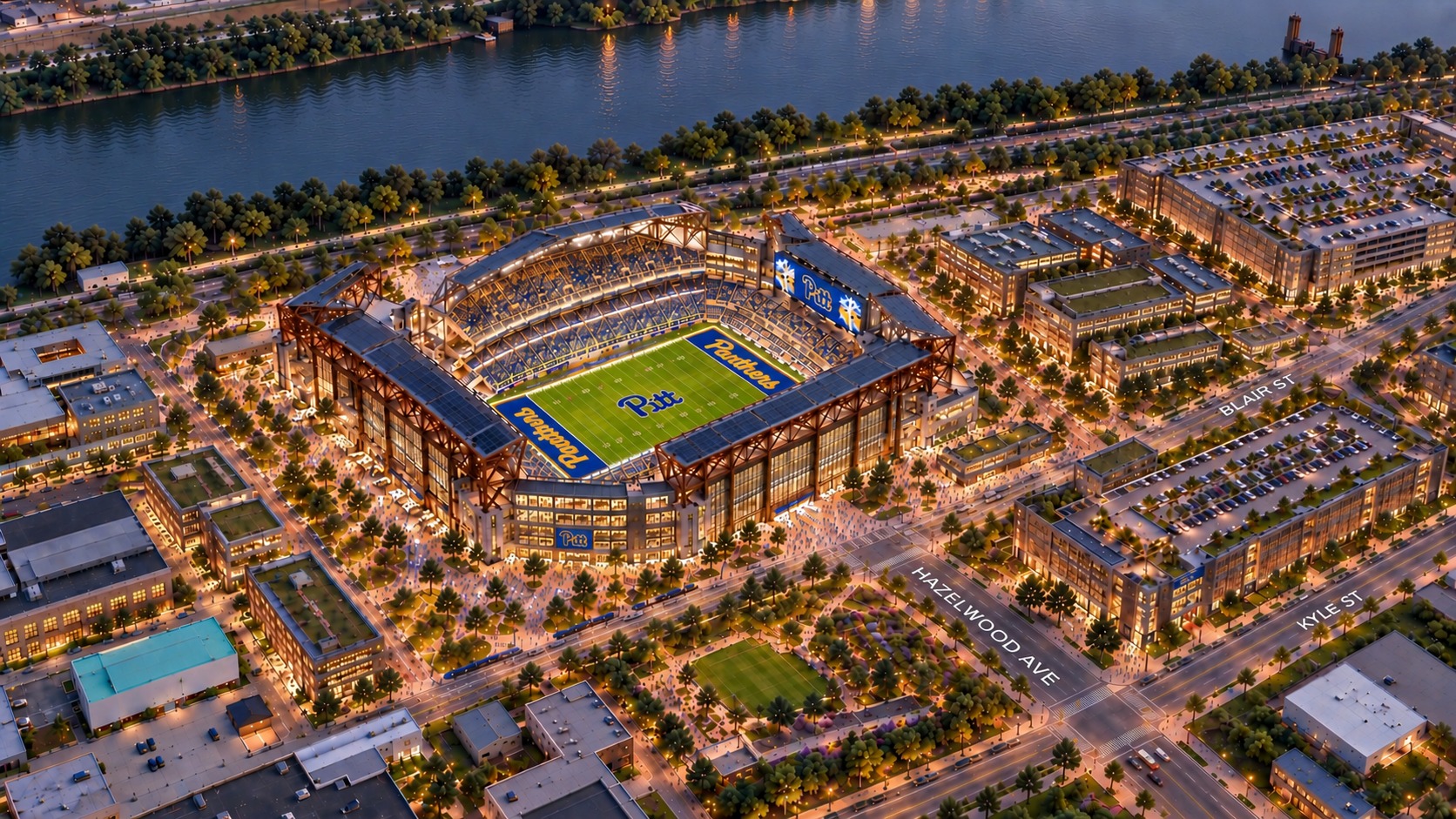
An Independent Concept Proposal
PANTHERS
STADIUM
AT HAZELWOOD
A home for Pitt Football. A hub for Innovation. A catalyst for Pittsburgh.
- A 45,000-seat football stadium and event space
- A 24/7/365 academic and innovation hub
- A commercial and civic district for all
This proposal is an independent concept and is not affiliated with, endorsed by, or sponsored by the University of Pittsburgh.
Why I Built This
I’m a lifelong Pitt fan, a proud alumnus, and someone who has called the Pittsburgh region home my entire life. I attended Pitt from 2004 to 2009 and spent four years in the Pitt Marching Band and Pep Bands, experiencing Pitt athletics and the North Shore era firsthand. Until recently, my family has held Pitt football season tickets dating back to the 1980s.
My passion for Pitt goes far beyond football. I love the University, its history, and what it represents to Pittsburgh. Pitt is a world-class academic and research institution with extraordinary athletic programs and facilities, and I've watched with tremendous pride as the University has continued to grow and invest in its future.
I've also watched Pitt's physical relationship with the city evolve. I remember seeing Pitt Stadium reduced to rubble. I experienced football on the North Shore as a student and band member. And in the years since graduation, I've watched an increasingly ambitious University continue to grow within the constraints of a dense urban campus.
That history is what led me to Hazelwood Green.
I believe Pitt has an opportunity to create something that addresses two long-term challenges at once: room to expand its academic, research, and innovation footprint beyond Oakland and a permanent home for Pitt Football that belongs unmistakably to the University.
The ideas presented here are entirely my own. They are not affiliated with, commissioned by, or endorsed by the University of Pittsburgh or the organizations involved with Hazelwood Green. I created this proposal because I believe the possibility is worth exploring and because I wanted to start a conversation about what Pitt's next century could look like.
Pitt has always been an institution with its eyes pointed upward. Its next great home should reflect that ambition—rooted in Pittsburgh's grit and industrial history, but built for its innovative future.
I want to see Pitt enter its next century with the same ambition, pride, and willingness to build boldly that defined the last one.
That's the spirit behind Panthers Stadium at Hazelwood.
Why Now?
Two independent developments are converging: the North Shore stadium agreements are approaching renewal, and Pitt Athletics has already acknowledged through its seating strategy that a smaller, fuller football environment produces a better collegiate experience.
| Signal | What is happening | Why it matters |
|---|---|---|
| Acrisure renewal window | SEA's principal Acrisure lease with PSSI reaches its renewal period around 2030-31. | Pitt should evaluate its future before simply defaulting into the next long-term North Shore arrangement. |
| 2025 attendance | 362,917 total home attendance across seven games; 51,845 average. | Demand supports a major venue while arguing against building excessive capacity. |
| 2026 seating strategy | Pitt took the upper East and West sides offline, setting football capacity at 51,416. | Pitt itself cites atmosphere, energy and fan connection as reasons for a tighter environment. |
A 45,000-seat building would target roughly 87% of Pitt's 2025 average attendance. That scarcity is a feature if the venue is designed around better seats, better sightlines, more premium inventory, a concentrated student section and a distinctly collegiate atmosphere. Marquee games can command premium pricing; ordinary games no longer need tens of thousands of visually empty seats.
A New Model for a University Stadium
The mixed-use premise is what separates this proposal from a conventional stadium. The football bowl is wrapped and surrounded by spaces that have independent academic, commercial and civic value.
| Program | Year-round role |
|---|---|
| Innovation Gallery | Public-facing demonstrations of robotics, mobility, AI, advanced manufacturing and student work. |
| Academic / project space | Flexible classrooms, studios, capstone work and interdisciplinary project rooms. |
| Enterprise offices | Rentable space for corporate research partners, startups and technology tenants. |
| Commercial district | Restaurants, cafés, Pitt retail and locally oriented businesses active beyond event days. |
| Hospitality / events | Clubs and suites designed to become conference, meeting and private-event inventory. |
| Public realm | Plazas, riverfront connections, green spaces, markets, festivals and community programming. |
Sensitive research should remain in purpose-built environments with appropriate security, vibration control, HVAC and loading. The stadium-facing research component should emphasize applied work that benefits from visibility and public engagement.
The 45,000-Seat Home for Pitt Football
The stadium should be designed around the experience Pitt is already trying to create at Acrisure: a fuller building with concentrated energy. Pitt's 2026 reduction to 51,416 seats was explicitly driven by fan feedback that the larger stadium environment could diminish atmosphere even when attendance was strong.
- 45,000 fixed seats, with standing-room and flexible event capacity where appropriate.
- Steep lower and upper bowls that keep spectators close to the field.
- A concentrated 10,000-seat-class Panther Pitt student environment, preserving the student section as the emotional engine of the building.
- Premium clubs, loge boxes and hospitality distributed to improve revenue without hollowing out the bowl.
- Large open steel bays that frame the hills, sky and riverfront rather than imitating an enclosed NFL venue.
- Videoboard placement integrated into the structural frame and visible from all primary seating zones.
The capacity should be presented as premium scarcity, not downsizing. A sold-out 45,000-seat stadium creates a stronger television image, better atmosphere and more pricing power than a 68,000-seat professional venue configured down with tarps.
A Premium Experience in Every Seat
The stadium should feel intentionally smaller than an NFL venue without feeling compromised. The seating bowl, concourses and floating canopy should be designed around proximity, comfort and unobstructed views so that the difference between a standard ticket and a premium ticket is primarily the level of amenity—not whether the fan can see the game well.
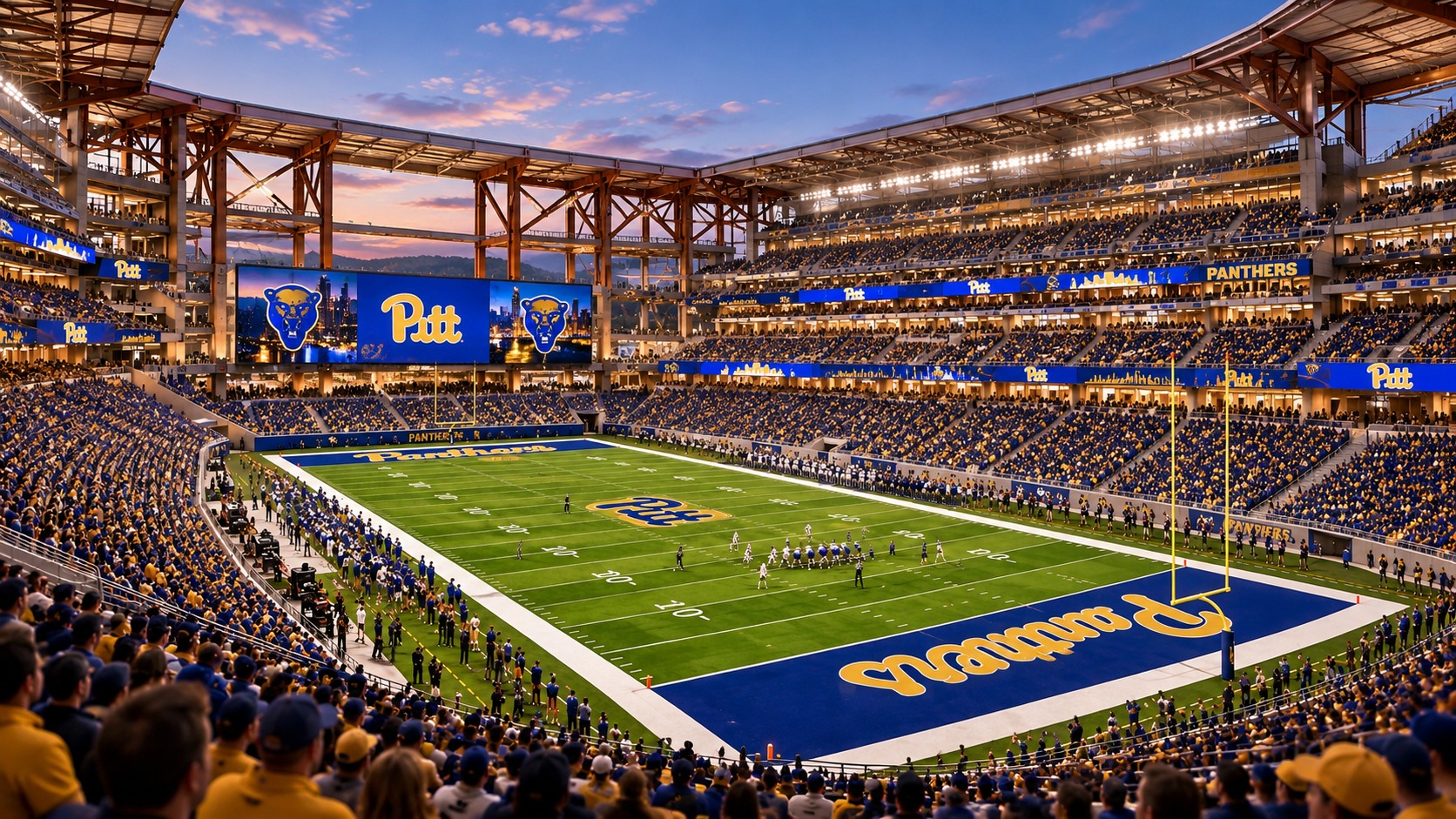
- Clear, unobstructed sight lines from every primary seating section, with careful attention to railings, portals, videoboards and standing spectators.
- Steep seating geometry and minimal distance between the sidelines and first rows so fans feel close to the action throughout the bowl.
- A floating canopy extending over nearly all seating areas, providing meaningful protection from rain and sun while preserving the open-air character of the stadium.
- Wide, intuitive concourses with field views where possible, reducing the feeling that fans leave the game when they leave their seats.
- Comfortable seating dimensions, modern restrooms, efficient concessions and strong cellular/Wi-Fi infrastructure as baseline expectations rather than premium upgrades.
Club-level seating should add a distinctly elevated experience: climate-controlled lounges, high-quality food and beverage, comfortable social spaces, dedicated entrances, upgraded restrooms and outdoor terraces that maintain direct visual connection to the field. The goal is hospitality that feels sophisticated but still unmistakably Pitt.
Corporate suites and boxes should function as relationship spaces for Pittsburgh employers, research partners, sponsors and major donors. On game day they provide premium hospitality; throughout the year, selected club and suite spaces can support meetings, receptions and university-corporate events. This makes premium inventory part of Pitt's partnership strategy as well as an athletics revenue stream.
Panther Pitt: A Student-First Experience
Panther Pitt should be treated as a defining architectural element of the stadium, not simply a block of discounted seats. The student section occupies a steep, concentrated end-zone environment designed to put students close to the field, keep them visually unified and project their energy across the entire bowl.
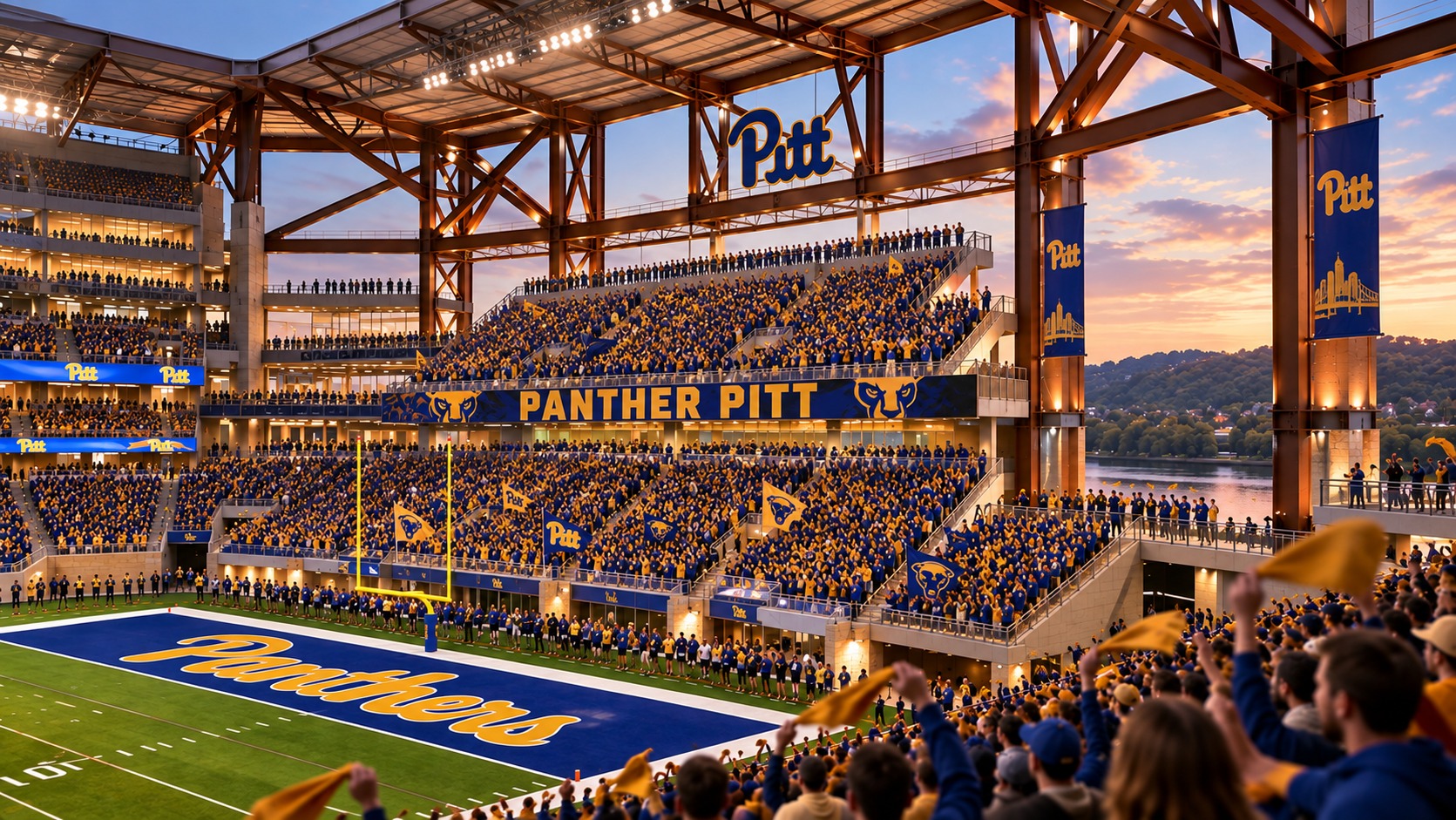
- A dedicated student entrance and pregame gathering zone that creates a clear arrival ritual before students reach their seats.
- A steep, continuous seating arrangement that keeps Panther Pitt visually intact rather than splitting students among decks or isolated sections.
- Safe-standing and rail-supported areas where appropriate, with conventional seating available where accessibility and comfort require it.
- Dedicated student concessions, restrooms and hydration points so students can remain in the section rather than dispersing throughout the stadium.
- A field-level relationship that makes the players, band, cheerleaders and student section feel connected during entrances, touchdowns and late-game moments.
- Integrated Pitt branding, retired-number references and traditions that make the section unmistakably Panther Pitt.
Pitt Band: Purpose-Built Game-Day Operations
Victory Heights will serve as the Pitt Band's institutional home, restoring dedicated facilities after the post-Pitt Stadium decades in Trees Hall. The Hazelwood stadium should provide purpose-built game-day operations that connect cleanly to that Oakland home.
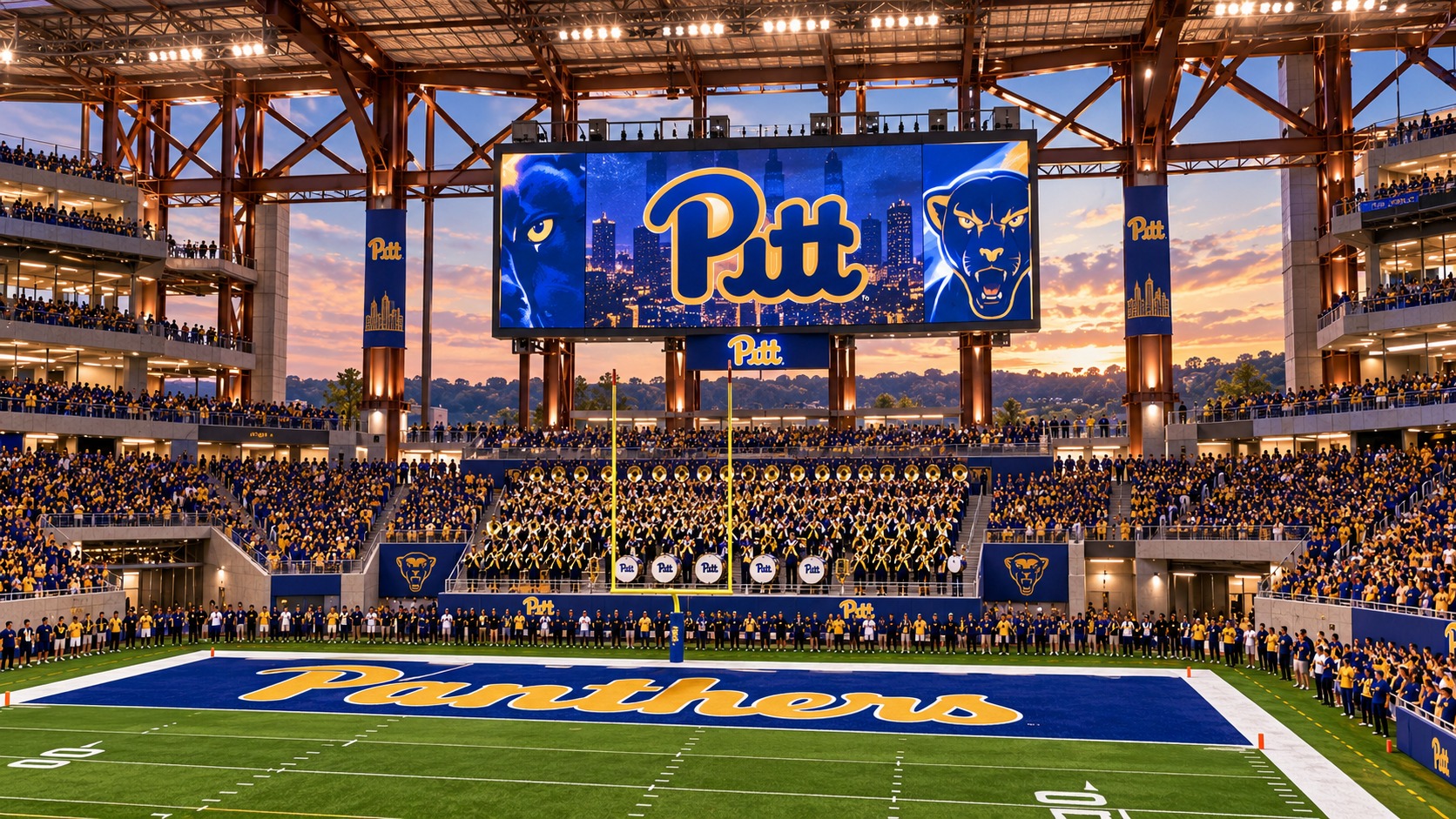
- A dedicated seating block near field level.
- A direct, wide and unobstructed route between seating and the field for pregame and halftime performances.
- Game-day instrument staging and secure temporary storage sized specifically for performance operations.
- Nearby restrooms, hydration, medical access and staff support.
- Bus/loading access designed around game-day movement between Oakland/Victory Heights and Hazelwood.
The Story of Pitt Football
A permanent Pitt Football museum should be incorporated into the stadium and remain accessible on non-game days. It would give alumni, recruits, families, tourists and visitors to the innovation district a reason to enter the building year-round while establishing the new stadium as the steward of a football tradition that predates it by more than a century.
The collection has extraordinary material to work with. Pitt recognizes nine football national championships, spanning 1915 through the undefeated 1976 team. As of 2026, 11 players associated with Pitt have been elected to the Pro Football Hall of Fame, tied for third-most among colleges, and Pitt has retired the jerseys of 11 players. The museum should present those achievements as a living lineage rather than a trophy case.
| Museum zone | Experience |
|---|---|
| Nine National Championships | A chronological championship gallery from Pop Warner and Jock Sutherland through the 1976 Tony Dorsett team. |
| Pitt to Canton | Stories and artifacts from Pitt's 11 Pro Football Hall of Fame members, including Dan Marino, Tony Dorsett, Mike Ditka, Larry Fitzgerald Jr. and others. |
| Retired Jerseys | Permanent recognition of the 11 retired Pitt jerseys, including Aaron Donald's No. 97, with player stories integrated throughout the building. |
| Great Games & Pitt Stadium | Film, audio, photographs and artifacts preserving the atmosphere of the original Pitt Stadium and defining games across eras. |
| The Next Chapter | A changing gallery for the current team, recruiting classes and new accomplishments so the museum never feels finished. |
This history should also spill into the stadium itself: retired numbers visible from the bowl, championship years integrated into concourses, historic imagery along circulation routes and storytelling embedded in premium spaces. The museum becomes the concentrated centerpiece, but the entire building carries the program's history.
Sustainability & Hazelwood Green
Hazelwood Green is a remediated industrial site with an explicit sustainability and community-development identity. The stadium concept aligns only if it behaves like a mixed-use district and environmental redevelopment project rather than a sea of parking surrounding a bowl.
- Solar photovoltaic canopies integrated into stadium roofs, garages and selected buildings.
- High-performance envelope, heat recovery, smart controls, LED lighting and demand management.
- Green roofs and native Pennsylvania plantings.
- Structured parking to minimize land consumed by cars and reduce heat-island effects.
- Stormwater treatment using permeable surfaces where site conditions permit, plus lined bioswales, rain gardens, detention and treatment where direct infiltration is inappropriate on a brownfield.
- Recycled-content steel, lower-carbon concrete, regional sourcing and design-for-disassembly principles.
- Transit-first event planning with explicit mode-share targets.
The public-benefit components are also the strongest candidates for grants and incentives. Pennsylvania capital and multimodal programs, PennDOT transportation funding, federal brownfield programs and then-current energy incentives should be pursued for independently valuable public scopes—not as a disguised subsidy for the football bowl.
Transportation & Infrastructure
A 45,000-seat stadium cannot be planned around the assumption that every fan drives to Hazelwood. The mobility plan must be designed at the same time as the building and should make non-driving options predictable enough that fans choose them voluntarily.
- High-frequency Oakland-Hazelwood student and campus shuttle spine with dedicated event-day loading zones.
- Event-day Pittsburgh Regional Transit service overlays and timed connections to Oakland and Downtown.
- Remote parking network using university, Downtown, South Side/Technology Center and contracted lots with prepaid shuttle reservations.
- Structured shared-use parking at district edges, serving weekday research/office demand and Saturday football demand.
- Protected pedestrian, trail and bicycle connections, including bike valet and micromobility parking.
- Geofenced rideshare and charter-bus zones separated from residential streets, with managed postgame release.
Hazelwood Traffic & Community Impact Study
Before design is locked, Pitt and the site owner should commission an independent transportation and community-impact study with Greater Hazelwood resident representation.
- Baseline weekday/weekend traffic, transit ridership, parking utilization, pedestrian/bike movement, freight and emergency response.
- Sellout, 35,000-attendance, weeknight-event, overlapping weekday-employment and severe-weather scenarios.
- Mode-share targets establishing maximum on-site private-vehicle share and minimum transit/shuttle/walk-bike shares.
- Intersection and corridor analysis for Second Avenue, Hazelwood Avenue, Blair Street, Greenfield approaches and other modeled routes.
- Resident parking protections, turn restrictions, event traffic staffing, anti-idling rules and rideshare enforcement.
- Air-quality and noise baseline with post-opening monitoring.
- Emergency management, evacuation and redundant access planning.
- Mandatory first-season audit and a funded mitigation reserve.
A standing Hazelwood Stadium Mobility & Community Committee should include Pitt, Hazelwood Green ownership, the City/DOMI, Pittsburgh Regional Transit, public safety, neighborhood organizations and residents through at least the first three operating seasons.
The Northwestern Model
Northwestern publicly launched We Will in 2014 with a $3.75 billion target and a donor-participation goal. After reaching those goals early, it raised the target to $5 billion and ultimately closed at $6.1 billion from 174,380 donors. The campaign funded university-wide priorities rather than a single capital project.
The stadium lesson came at the campaign's end. The Ryan family's $480 million gift—the largest in Northwestern history—supported biomedical research, neuroscience, global health, economics, business and the redevelopment of Ryan Field. Northwestern described the stadium component as a lead gift and explicitly planned to raise additional philanthropy for the project.
That is the model for Panthers Stadium at Hazelwood. The stadium could be one visible expression of a broader institutional investment, with gifts allocated across athletics, research, students, community impact and the public realm.
The next 100 years start here
One hundred years ago, Pitt Stadium opened. The next year, Pitt broke ground on the Cathedral of Learning—both acting as a physical declaration of what the University aspired to become.
Hazelwood Green offers the same kind of declaration for the next century: Oakland remains Pitt's academic heart, while Hazelwood becomes a new front door connecting the University to innovation, industry, entrepreneurship, athletics and Pittsburgh.
This proposal is not affiliated with, endorsed by, or sponsored by the University of Pittsburgh. It is an independent concept proposal. This document is not a feasibility study, land-use application, environmental report, traffic study, fundraising plan or financial commitment. Cost, program, grant eligibility, development rights, lease terms and funding structures require professional validation.
The Petition
SIGN THE PETITION
Sign if you support the University of Pittsburgh exploring Hazelwood as a potential home for Pitt Football and a year-round hub for academics, innovation, & community.
Supporters
PRIVACY POLICY
Your information will be used only to verify and count support for this independent proposal. Your email address and other personal information will not be sold, shared publicly, or used for marketing or email communications.
If support for this proposal is presented to the University of Pittsburgh, aggregate information and verified signature counts may be shared to demonstrate authentic support. Individual contact information will not be provided to the University or any other third party.
No personally identifiable information will ever appear on this site.